Why Small Imperfections Often Lead to the Best Furniture Deals
Small scratches and showroom wear can unlock huge furniture discounts. Learn how smart buyers spot cosmetic flaws and turn them into major savings.

FLRPL Editorial Team
Author
Why Small Imperfections Often Lead to the Best Furniture Deals
How to spot the opportunity hiding behind a scratch, scuff, or showroom flaw — and walk away with the best deal in the store.
TL;DR
- Minor cosmetic flaws — scratches, scuffs, light dents, cushion compression — are often the only thing standing between you and a great piece of furniture at a fraction of its original price.
- Most showroom imperfections are surface-level and don't affect the quality, durability, or function of a piece in any meaningful way.
- Retailers discount imperfect items not because the items are bad, but because it is faster and easier to move inventory than to repair it.
- A $10–$30 touch-up kit or professional cleaning can resolve many of these issues entirely — unlocking hundreds of dollars in savings.
- Smart buyers learn to distinguish cosmetic flaws from structural problems. Once you know the difference, imperfect inventory becomes your best hunting ground.
- Platforms like FLRPL connect shoppers directly with verified local retailers selling floor samples, clearance pieces, and open-box goods — exactly the kind of inventory where the best deals live.
The Moment Most Shoppers Walk Away
Picture this: you are wandering through a furniture showroom, not really looking for anything in particular, when a piece stops you cold. A dining table in a rich walnut finish. A sofa with clean lines and upholstery that feels exactly right. A sideboard you can already picture against the wall in your dining room.
Then you notice the tag. Forty percent off. Sixty percent off. You look closer — and you find it. A faint scratch along one table leg. A small scuff on the corner of a cabinet door. A slight wrinkle in the upholstery from months of customers sitting down to test it. Maybe a shallow dent on the side panel of an appliance that will be shoved against a wall the moment it arrives in your home.
And most shoppers walk away.
This is the moment the best buyers are waiting for.
The best furniture hunters are not looking for perfection. They are looking for value hiding behind a small flaw — and they understand that in most cases, that flaw is the entire reason the price is extraordinary. The imperfection is not the obstacle. It is the opportunity.
This article is about learning to see discounted, flawed, and showroom-worn inventory the way experienced buyers see it: not as damaged goods, but as some of the best deals in the store.
Why Imperfect Inventory Exists in the First Place
To understand why small flaws create big opportunities, it helps to understand how furniture actually moves through a retail showroom.
Showroom life is hard on furniture. A sofa on the floor gets sat on dozens of times a day. A dining table gets leaned on, tested for wobble, and moved around the showroom whenever a floor manager decides to refresh the layout. Finishes pick up fingerprints and microscopic scratches. Cushions compress under the weight of curious shoppers. Lighting fixtures develop minor wear on their metal surfaces. Appliances arrive from warehouses with small cosmetic dents that occurred somewhere in the supply chain.
None of this reflects poor quality. It reflects the reality of retail. Furniture that has lived on a showroom floor for six months or two years has been doing its job — it has been displayed, tested, admired, and occasionally bumped into. The bones of the piece are almost always perfectly sound.
Common reasons items end up discounted include:
- Showroom wear from regular customer traffic and testing
- Shipping scuffs or minor cosmetic damage from transit
- Customer returns where the item was never used or only briefly used
- Discontinued product lines or finishes being phased out
- Seasonal inventory resets where retailers need to clear floor space for incoming collections
- Overstock situations where too many units arrived and storage is limited
Understanding exactly what a floor sample actually is — and how it differs from open-box or overstock merchandise — matters a great deal when you are evaluating a discounted piece. Each category carries its own set of typical imperfections and its own type of savings. FLRPL has a useful breakdown of floor sample vs. open box vs. overstock inventory that is worth reading before you start shopping.
Common Imperfections That Are Almost Always Cosmetic
Here is something worth knowing before you set foot in a clearance section: showroom lighting is notoriously unflattering to furniture. What appears to be a glaring scratch under those bright overheads will often be nearly invisible once a piece is in your home, under natural light, next to your other furniture.
This matters because many buyers write off items based on how they look under the worst possible lighting conditions. The experienced buyer looks past the showroom glare and asks a simpler question: will this affect how the piece looks and functions in my home?
For the vast majority of cosmetic imperfections, the honest answer is no.
Furniture
Small scratches in wood finishes are among the most common imperfections in floor sample inventory, and also among the easiest to address. A table leg with a hairline scratch has not lost any structural integrity. Neither has a cabinet with a faint scuff along its base from being moved around the showroom floor. Loose upholstery threads, minor fabric pilling from customer contact, and cushion compression from testing are similarly superficial. None of these affect how a piece was constructed, how long it will last, or how it will perform in your home.
Lighting fixtures
Lighting is particularly forgiving of minor showroom wear. A small scratch on a metal pendant arm or a bit of finish wear near the base of a floor lamp has zero effect on how the fixture performs electrically or how it looks when it is on and illuminating a room. Buyers frequently overlook excellent lighting pieces because of surface-level wear that would require standing inches away to detect in a real living space.
Appliances
Appliances are a category where cosmetic and structural damage are genuinely easy to distinguish. A small dent on the side panel of a refrigerator that will face a cabinet wall is purely cosmetic — it has no effect on how the appliance operates, cools, or consumes energy. Cosmetic scratches on non-visible surfaces are similarly irrelevant. The key is learning to identify which surfaces will actually be seen in use and which will not, then evaluating the imperfection accordingly.
Simple Fixes That Restore Value
One of the most important things experienced buyers understand is that the gap between "showroom flawed" and "looks great in my home" is often measured in ten dollars and twenty minutes.
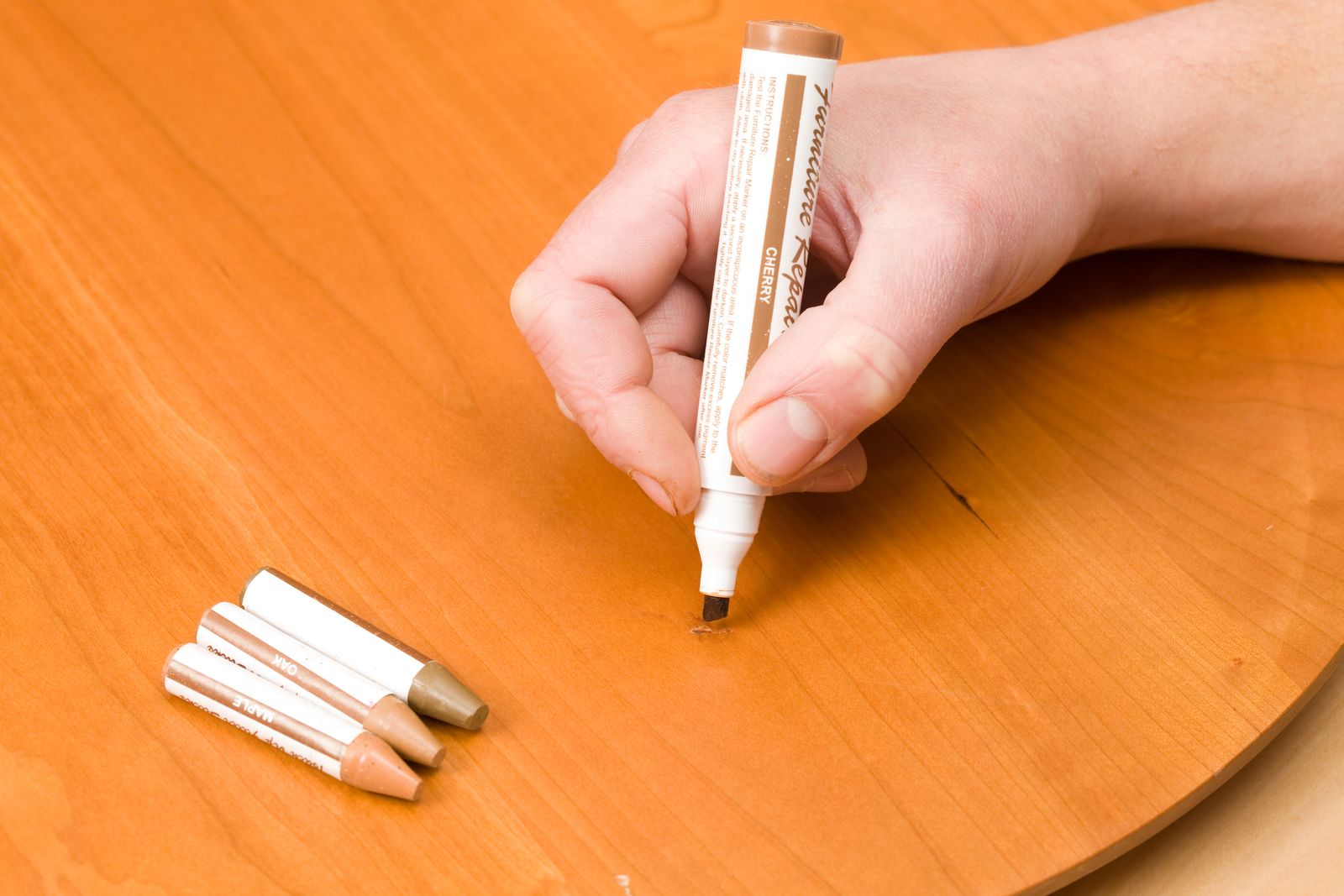
Wood furniture is particularly forgiving. A wood touch-up marker in the right stain color — available at any hardware store for a few dollars — can make a hairline scratch on a table leg essentially disappear. Wax fill sticks handle slightly deeper scratches and minor gouges. A quality furniture oil or polish can revive a dull finish and reduce the visibility of surface wear dramatically. For loose legs or minor wobbling, a tube of wood glue and a clamp is often all that stands between you and a perfectly stable piece.
Upholstered pieces have their own set of inexpensive solutions. A fabric shaving tool handles pilling from customer contact quickly and effectively. Steam cleaning can refresh upholstery that looks tired from showroom life. Professional sofa cleaning services typically run $75–$150 — still well within a profitable trade-off on most floor sample discounts. Compressed or matted cushions can often be refluffed simply by airing them out or adding a bag of fiberfill, which costs very little.
For appliances with cosmetic damage, many manufacturers sell replacement trim pieces and side panels — a fact that surprises most buyers. A dented refrigerator side panel is a solvable problem if the model is relatively current.
The broader point is this: there are now hundreds of YouTube tutorials walking buyers through exactly these repairs, step by step, in real time. What looks intimidating from a distance is often straightforward once you understand what you are dealing with. The information is free. The materials are cheap. The savings are real.
Most small cosmetic repairs cost somewhere between $10 and $50. On a floor sample sofa that was originally $2,400 and is now $950, that math is almost always in the buyer's favor.
When Imperfections Should Be a Deal Breaker
To be useful, any guide to buying imperfect furniture has to be honest about the other side of this equation. Not every discounted piece is a good deal. Some imperfections are genuinely disqualifying — and the ability to tell the difference is what separates a savvy buyer from someone who brings home a problem.
Structural damage is in a different category from cosmetic damage entirely. A damaged or cracked frame on a sofa is not a minor issue — it is a fundamental problem with the piece's integrity. A broken suspension system (the webbing or springs that support the seat) means the sofa will never sit properly regardless of how good it looks. Warped wood on a tabletop is not going to flatten itself. Major upholstery tears that expose the underlying foam or batting are expensive to repair professionally.
With appliances, any imperfection that involves the functional components — a compressor that runs erratically, a door seal that does not close properly, a mechanism that is not operating as designed — is a structural problem, not a cosmetic one. The exterior dent is irrelevant if the interior is compromised.
The simple test is this: does the imperfection affect how the piece looks from a normal distance, or does it affect how the piece functions? Cosmetic = surface, visible, fixable with materials and time. Structural = integrity, mechanism, load-bearing. One is an opportunity. The other is a warning.
FLRPL's guide on how to tell if a local home deal is worth it goes deeper on this evaluation process and is worth reading before you commit to any discounted piece.
Why Retailers Often Discount Instead of Repairing
A question worth asking: if a small repair could restore an item's value, why don't retailers just do the repair themselves and sell at full price?
The answer is economics, not laziness. Furniture retailers are in the business of selling furniture, not restoring it. Coordinating a repair requires scheduling, labor costs, time off the floor, the possibility of a repair that doesn't meet the showroom's standards, and the potential for repeated customer negotiations over whether the result is good enough. For a retailer managing dozens of SKUs and a rotating floor, spending two weeks arranging a touch-up on one floor sample table leg is not a sensible use of resources.
It is almost always faster, simpler, and more profitable in aggregate to discount the item, move it quickly, and clear the floor space for the next delivery. The retailer gets inventory velocity. The buyer gets a price that reflects the flaw — even though the flaw may take thirty minutes and fifteen dollars to resolve entirely.
Understanding this dynamic is what makes savvy buyers such effective shoppers. They are not exploiting anyone — they are filling a role in the market that benefits both parties. The retailer moves inventory. The buyer acquires a high-quality piece at a discount they could not otherwise justify. The imperfection is the mechanism that makes the deal possible.
How Smart Buyers Hunt for These Opportunities
Buyers who consistently find the best deals in furniture retail have usually developed a specific mindset: they do not walk into a showroom looking for the perfect piece. They walk in looking for the imperfect piece that is worth more than its price tag suggests.
In practical terms, this means deliberately seeking out floor samples, clearance sections, showroom displays, and overstock inventory. These are the areas where the best deals concentrate. A floor sample is usually a higher-quality piece than the entry-level alternatives — it was chosen to be on display precisely because it represents the brand well. The fact that it has been on the floor for a year does not change its construction, its materials, or its design. It just means the price has come down.
Experienced buyers also shop with inspection in mind. They bring a flashlight to see finishes clearly. They press on sofa frames and seat cushions. They open cabinet doors to check alignment. They look at imperfections from several feet away, not just inches away, because that is how the piece will be seen in their home. They ask sales staff directly: what is the history of this item, and is this the only reason for the discount?
FLRPL's resource on how to find the best drops on FLRPL has practical guidance on navigating the platform to surface exactly this kind of inventory — the floor samples, clearance items, and open-box pieces that represent genuine value for buyers who know what to look for.
Why Buying From Local Retailers Changes Everything
When it comes to imperfect inventory, the single most important advantage a buyer can have is the ability to see the item in person before committing to it. This is where local retailers provide an advantage that no online big-box retailer can match.
Buying a floor sample or clearance item from a photograph online is a fundamentally different experience from standing in front of it. You can see exactly what the imperfection looks like and judge its severity for yourself. You can sit on the sofa, feel the fabric, check the frame. You can ask the salesperson — who actually knows the piece's history — what caused the discount and whether there are any other issues you should know about. You can make an informed decision based on real information, not a product description and a handful of photos taken at flattering angles.
Local retailers also handle logistics in a way that matters for large furniture pieces. Local pickup versus shipping large home items is a real consideration: a floor sample sofa available for local pickup avoids the additional risk of shipping damage that comes with any large piece sent across the country. What arrives is exactly what you inspected.
The deeper case for local retail is covered in FLRPL's comparison of buying from local retailers versus online big-box stores — but the short version is this: for discounted and imperfect inventory specifically, local is almost always better. You can see it, touch it, ask about it, and make a decision grounded in actual information.
How FLRPL Connects You to the Best Deals
FLRPL was built around a simple idea: the best furniture deals are sitting in local showrooms right now, and most buyers have no reliable way to find them.
The platform connects shoppers with verified local retailers who are actively selling floor samples, clearance inventory, open-box merchandise, overstock pieces, and showroom display items. These are exactly the categories where imperfect inventory lives — and where buyers who understand the opportunity can find genuinely exceptional value.
Rather than scrolling through generic listings and hoping for the best, FLRPL surfaces inventory that is already priced to move, from retailers who have already decided they would rather discount and sell than hold and negotiate. You can learn more about how FLRPL works, explore why local shoppers trust FLRPL, or browse the latest drops from local retailers near you.
The inventory changes constantly — floor samples get pulled, clearance prices drop, new showroom pieces get rotated out. Buyers who check in regularly are the ones who catch the best opportunities before anyone else does.
The Opportunity Inside the Flaw
There is a useful reframing that experienced furniture buyers carry with them into every showroom: a small imperfection is not a reason to walk away. It is the reason the price is where it is. It is the explanation for the tag. And in most cases, it is the entire reason the deal exists at all.
The scratch on the table leg, the scuff on the cabinet door, the compressed cushion from a year of testing — these are not flaws in the piece. They are the history of the piece. They are what separates a good price from an exceptional one. And for buyers who know how to look at them clearly, they represent exactly the kind of opportunity that most shoppers walk past without a second glance.
The best buyers are not hunting for perfect furniture. They are hunting for the opportunity hiding behind a small imperfection — and learning, over time, that those two things are often the same piece.
Go look at the clearance section. Ask about the floor samples. Pick up the touch-up marker if you need to. The best deal in the store might be the one with the little orange sticker on it.
Published by the FLRPL Journal•flrpl.com
Related Articles

Floor Sample vs. Open-Box vs. Overstock: What’s the Difference?
Learn the difference between floor samples, open-box items, and overstock. Compare condition, warranties, pricing, and risks to shop smarter on FLRPL.


What Is a Floor Sample? The Smart Shopper's Guide to Showroom Deals
Floor samples are discounted showroom pieces. Learn why they’re sold, typical savings, what to check, and how FLRPL helps you find verified local Drops.

How to Find the Best Drops on FLRPL: A Shopper's Guide
Learn how to find the best floor samples, open-box items, and overstock deals on FLRPL. Tips for browsing local drops, inspecting condition, and shopping smarter.
Don't Miss the Next Drop
Be first to know when premium floor samples, open-box items, and clearance goods hit the market near you.