Why Buying From Local Retailers Near You Beats Big-Box and Online Stores
Looking for furniture or appliances near you? Learn why local retailers offer better value, convenience, and service than big-box or online stores.

FLRPL Editorial Team
Author
You open your laptop with a clear goal: find a sofa that fits your living room, matches your budget, and can be delivered this week. You type "furniture near me" into Google, and within seconds, you're buried in results.
The first page shows you big-box retailers with generic inventory, online marketplaces promising "fast shipping" (six to eight weeks), peer-to-peer listings with grainy photos and vague descriptions, and national chains offering financing plans but limited local stock. You click through dozens of tabs. You compare prices that don't include shipping. You read reviews that contradict each other. Two hours later, you're no closer to a decision—and significantly more frustrated.
Here's what most shoppers don't realize: The best furniture and appliance deals are often within a 15-mile radius of where you're sitting right now, in local showrooms and retail warehouses you've never heard of, listed at prices that undercut national retailers by 40-60%.
These deals don't appear at the top of search results because local retailers can't outbid Amazon and Wayfair for ad placement. They're not listed on massive e-commerce platforms because independent stores don't have the resources to manage multiple selling channels. And they're rarely visible on peer-to-peer marketplaces because established retailers don't operate that way.
This guide will show you why "near me" searches—when done strategically—lead to better value, faster fulfillment, higher-quality service, and significantly lower risk than the dominant online shopping model. More importantly, we'll explain exactly how to find these local deals without spending hours calling stores or driving across town.
What "Near Me" Shoppers Are Really Searching For
When someone types "furniture near me" or "appliances near me" into a search engine, the intent goes far deeper than geographic convenience. Understanding what shoppers actually want reveals why local retailers offer inherent advantages over digital-first competitors.
Confidence in Purchase Decisions
The core concern: Online furniture and appliance shopping requires trusting product photos, relying on specifications that may be inaccurate, and hoping that color, size, and quality match expectations. Research from the National Retail Federation indicates that furniture and appliance categories have some of the highest return rates in e-commerce—often 15-30%—precisely because buyers can't assess items before purchase.
Local shopping eliminates this uncertainty. You see the actual sofa fabric under natural and artificial lighting. You open the refrigerator doors to confirm the interior layout works for your needs. You test drawer glides on dressers to verify build quality. Confidence comes from direct inspection, not optimized product photography.
Fast and Predictable Access to Products
"Near me" searches signal urgency. Shoppers searching for local options typically need items within days or weeks, not months. They're furnishing a new home, replacing a broken appliance, or working within project timelines that don't accommodate extended lead times.
Delivery timeline comparison:
- National online retailers: 4-12 weeks for furniture; 2-6 weeks for appliances (subject to supply chain disruptions)
- Big-box stores: 1-4 weeks for in-stock items; often similar to online for special orders
- Local retailers with inventory: Same-day to 3-day pickup for floor models and in-stock items; 1-2 weeks for special orders from regional suppliers
The value of immediacy compounds when you consider opportunity costs. Waiting eight weeks for a sofa means eight weeks without functional living room seating. Waiting three weeks for a refrigerator means spoiled food, restaurant meals, and daily inconvenience.
Transparent Pricing Without Hidden Costs
Online furniture shopping appears straightforward until you reach checkout. Then you discover:
- Shipping fees: $150-600 for large furniture, $75-250 for appliances
- White-glove delivery: Additional $200-500 if you want professionals to bring items inside and assemble
- Oversized item surcharges: $50-150 on top of standard shipping
- Assembly fees: $75-200 for furniture requiring construction
- Return shipping costs: Often non-refundable or charged to customer
A sofa listed at $1,200 becomes $1,650 after fees—a 37.5% increase that wasn't visible during product browsing.
Local retailers typically operate on simpler pricing models: The listed price is usually the full price. Delivery (if needed) is quoted upfront as a flat local rate, typically $75-200 for furniture, $50-150 for appliances. For floor models and open-box items available for self-pickup, you pay the listed price and nothing more.
Easy Coordination for Pickup or Delivery
"Near me" shoppers value logistical simplicity. Coordinating furniture delivery through national retailers often involves:
- Scheduling delivery windows weeks in advance with no flexibility
- Receiving vague 4-8 hour delivery windows on the scheduled day
- Dealing with third-party delivery contractors who may not match retailer quality standards
- Limited accountability when deliveries are missed or items arrive damaged
Local retailers offer direct coordination: You speak with the same staff who sold you the item. They schedule specific delivery times or pickup windows that accommodate your schedule. If problems arise, you resolve them with the business owner or manager—not an overseas call center with limited authority.
Real Customer Support Before and After Purchase
The moment you need help with an online purchase—a missing part, a warranty claim, a return—the convenience advantage evaporates. You're navigating automated phone systems, submitting tickets through web portals, and waiting days for responses.
Local retailers provide phone numbers that reach actual employees. You can walk back into the showroom and speak with a manager. Issues get resolved through direct human interaction, often the same day.
This matters most when purchases go wrong. A refrigerator that stops cooling three months after purchase needs immediate attention. An online retailer requires you to troubleshoot through email or chat, wait for warranty approval, and schedule service through their authorized network—a process that can take days or weeks. A local retailer who sold you the appliance often facilitates warranty service immediately or provides a loaner unit while yours is repaired.
The Hidden Costs and Risks of Big-Box and Online Shopping
The dominance of major e-commerce platforms and national chains in search results doesn't reflect a consumer advantage—it reflects advertising budgets. Understanding the structural downsides of these channels reveals why local alternatives often deliver superior value.
Shipping Delays, Damage, and Missing Components
Large furniture and appliances travel complex supply chains before reaching your home:
- Manufactured overseas or in distant domestic facilities
- Shipped to regional distribution centers
- Transferred to local warehouses
- Loaded onto delivery trucks
- Transported to your address by third-party contractors
Each transition point introduces risk. Industry data suggests that furniture damage during shipping occurs in approximately 10-15% of deliveries for large items. Appliances experience damage in roughly 5-8% of deliveries, with rates climbing for long-distance shipments.
Missing parts and hardware pose similar challenges. A dining table arrives without bolts. A bed frame is missing the center support rail. A sectional sofa arrives with four pieces instead of five. Resolution requires contacting customer service, waiting for replacement parts to ship, and often dealing with follow-up delivery coordination—adding days or weeks to an already extended timeline.
Local pickup eliminates shipping damage entirely. You inspect the item before leaving the store, verify all components are present, and transport it yourself or arrange local delivery with minimal handling.
Limited Product Transparency and Accuracy
Online product listings optimize for conversion, not accuracy. This creates predictable problems:
Photography manipulation: Professional staging, optimal lighting, and photo editing make products appear higher-quality than reality. Colors shift between screen displays. Textures look different in person. Proportions are distorted by camera angles.
Specification inconsistencies: Dimensions may be listed incorrectly or rounded. Weight estimates often exclude packaging. Materials descriptions use vague terms like "wood-look finish" (plastic laminate) or "leather upholstery" (partial leather with vinyl sides and backs).
Assembly complexity understatement: "Easy assembly" can mean anything from snapping legs onto a sofa to constructing an entire bed frame with 200+ pieces and unclear instructions.
Condition ambiguity for open-box items: Many online marketplaces aggregate open-box and refurbished inventory from multiple sources with inconsistent grading standards. "Like new" from one seller means unopened box; from another seller, it means used for six months and returned.
Local showrooms provide complete transparency. The floor model sectional you're considering is the exact piece you'll take home. You see the actual color, feel the fabric quality, test the cushion firmness, and measure dimensions yourself if needed.
Complicated, Expensive, and Frustrating Returns
Return policies look generous until you actually need to use them:
Free returns with massive asterisks: Many retailers offer "free returns" that exclude large items. Furniture and appliances typically require you to arrange and pay for return shipping, which can cost $200-600 depending on size and distance.
Restocking fees: Even retailers accepting returns often charge 15-25% restocking fees for large items, meaning your $1,500 sofa refund becomes $1,125-1,275.
Repackaging requirements: You must repackage items in original packaging (which many customers discard after unpacking) or pay for professional repackaging services.
Time-consuming logistics: Scheduling return pickups can take 1-3 weeks. Processing refunds adds another 5-14 business days after the item is received and inspected.
Partial refunds for damage: If the item is damaged during return shipping—even if it wasn't your fault—retailers may issue partial refunds or deny the return entirely.
Compare this to local returns: You contact the retailer directly, return the item to their location during business hours, and receive immediate resolution. Many local retailers offer store credit returns even on final-sale floor models if there's a legitimate quality issue, because their reputation in the community depends on customer satisfaction.
No Real Accountability or Relationship
When something goes wrong with an online purchase from a national retailer, you interface with:
- Automated chat systems with limited problem-solving capability
- Call centers staffed by representatives reading from scripts with minimal authority
- Different customer service agents each time you call
- Escalation processes that require repeated explanations of your issue
- Outsourced support teams with no connection to the business
Structural accountability gap: Online retailers operate at scale, processing thousands of orders daily. Individual customer issues represent negligible impact on their business metrics. Your problem is a ticket number, not a relationship.
Local retailers operate on fundamentally different economics. A dissatisfied customer:
- Leaves negative reviews visible to the entire community
- Tells friends, family, and neighbors about poor experiences
- Doesn't return for future purchases (repeat customer value matters more to small businesses)
- Damages the retailer's reputation in a geographic area they depend on
This creates inherent accountability. Local retailers cannot hide behind corporate policies or offshore customer service. The business owner or manager knows that poor service directly impacts their livelihood.
One-Size-Fits-All Service Models
Big-box and online retailers optimize for efficiency, not personalization:
- Standard delivery windows with no flexibility for your schedule
- No accommodation for special circumstances (tight doorways, stair access challenges, early/late delivery needs)
- Limited product knowledge from sales staff who work across dozens of categories
- No relationship-building or customized service
Local retailers adapt to customer needs: They schedule deliveries around your work schedule. They send experienced delivery staff who know how to navigate tight spaces. They provide detailed product knowledge because staff specialize in fewer categories. They remember repeat customers and offer personalized service.
Why Local Retailers Near You Consistently Outperform National Alternatives
The structural advantages of local retail create measurable benefits for shoppers willing to look beyond the first page of Google results.
Inspect Before You Commit: Seeing Is Believing
Showroom shopping provides information density impossible to replicate online:
Material quality assessment: You run your hand across sofa upholstery to feel texture, weight, and weave quality. You examine wood finishes up close to differentiate solid hardwood from veneer over particleboard. You test appliance doors to judge hinge quality and build precision.
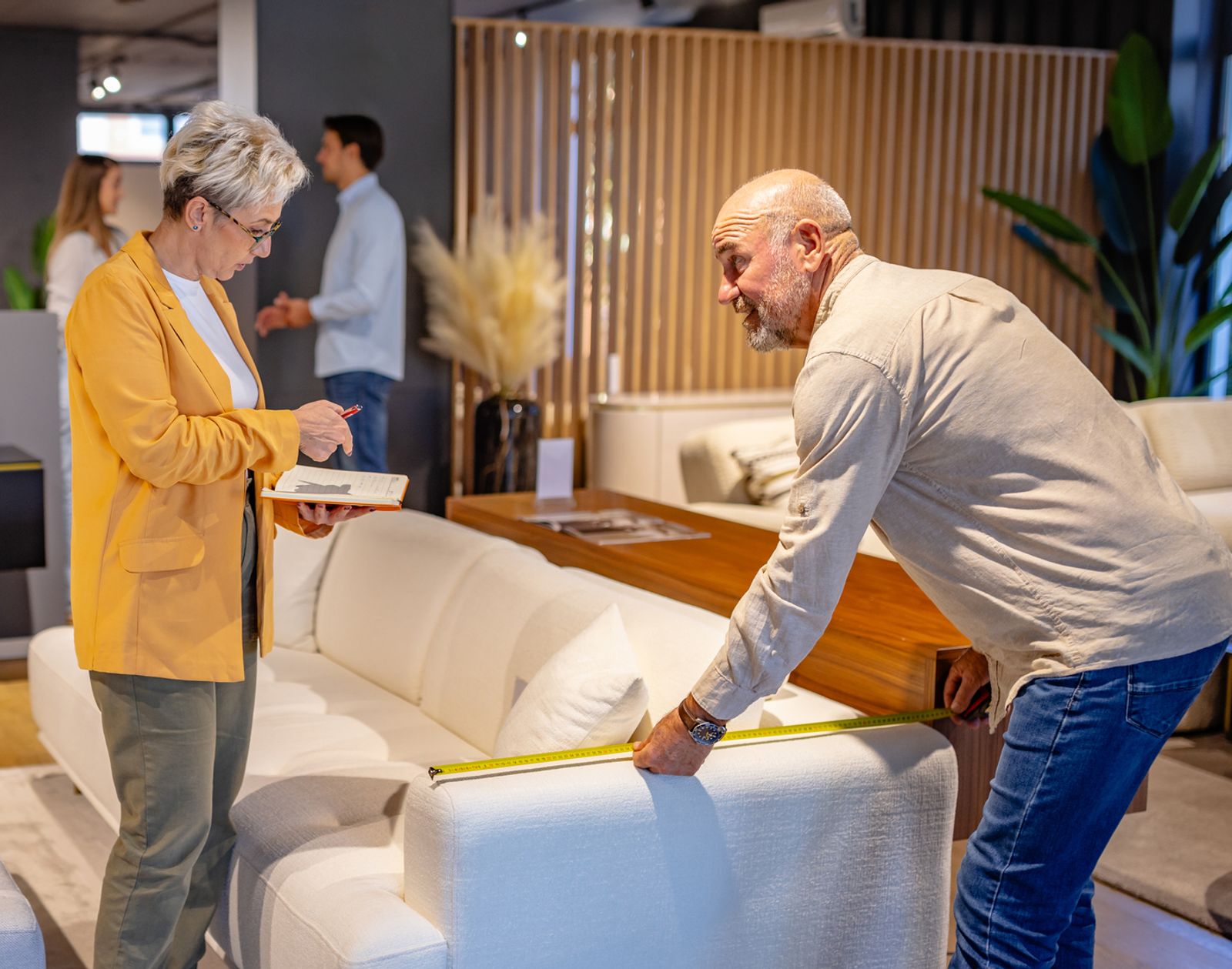
Dimensional accuracy: You bring your tape measure and verify that the 84-inch sofa is actually 84 inches, not 86 inches as incorrectly listed online. You confirm that the refrigerator's depth with door open matches your kitchen layout requirements.
Color and finish verification: You see how fabric colors look under the lighting conditions in your home (natural daylight vs. warm LED vs. fluorescent). You compare finish options side-by-side rather than clicking through photos on different screens.
Functional testing: You open every drawer in a dresser to confirm smooth glides and solid construction. You recline in an armchair to test comfort and ergonomics. You operate appliance controls to assess interface design and ease of use.
Comparative evaluation: You sit on five different sofas within ten minutes, directly comparing comfort, depth, and arm height. You stand in front of three refrigerators simultaneously to compare interior layouts and storage configurations.
This sensory evaluation process dramatically reduces purchase regret and returns.
Real Expertise from People Who Know the Products
Local furniture and appliance sales professionals develop deep product knowledge because they:
Work with limited SKU counts: Instead of managing thousands of products across multiple categories like big-box employees, local retail staff specialize in dozens of furniture lines or appliance brands. They know construction details, manufacturer reputations, common issues, and best values.
Receive manufacturer training: Quality local retailers send staff to manufacturer training sessions where they learn about new products, installation requirements, warranty coverage, and maintenance recommendations.
Handle the same products repeatedly: They deliver, set up, and service the items they sell. They hear customer feedback. They see which products hold up well and which generate service calls. This creates experiential knowledge impossible to gain from reading product specs.
Have personal stake in recommendations: Sales staff at established local retailers know that poor recommendations damage customer relationships and their own commission income. They steer customers toward appropriate products, not just high-margin items.
Compare this to big-box retail: Employees often work across multiple departments, receive minimal product training, and change jobs frequently. They're reading the same product descriptions available online, not providing meaningful expertise.
Immediate Availability: Same-Day to 3-Day Fulfillment
Local retailers typically maintain three inventory categories that offer fast fulfillment:
Floor samples and display models: The sectional you're sitting on in the showroom can often go home with you today. It's already assembled, already inspected, and available immediately at a discount.
In-stock warehouse inventory: Many local retailers maintain warehouse stock of popular items, allowing for 1-3 day delivery or pickup once they verify availability.
Regional supplier networks: Independent retailers often work with regional furniture and appliance distributors who can deliver in-stock items within 3-7 days—dramatically faster than overseas shipping timelines.
Floor model advantage for urgent needs: If your refrigerator breaks and you need a replacement this week, floor models from local retailers solve this problem. Online retailers and national chains typically cannot.
Community Accountability Creates Quality Standards
Local retailers operate in a fishbowl environment where reputation is everything:
Review visibility matters more: A negative review for a national retailer processing 100,000 orders monthly has minimal impact. A negative review for a local retailer serving hundreds of customers annually can meaningfully damage their business.
Word-of-mouth dependency: Local businesses rely on referrals from satisfied customers. This creates direct financial incentives to provide excellent service, stand behind products, and resolve issues quickly.
Long-term presence signals quality: Retailers who've operated in the same community for 10-20+ years have demonstrated their ability to satisfy customers and manage businesses ethically. Longevity indicates reliability.
No corporate buffer: When you're unhappy with a purchase from a local retailer, you can speak directly with the business owner or manager who has decision-making authority. They can approve returns, adjust pricing, or provide accommodation immediately.
Personalized Service Adapted to Your Needs
Local retailers offer flexibility impossible in corporate retail environments:
Customized delivery scheduling: "We can deliver between 2-3pm on Thursday" instead of "sometime between 10am-6pm."
Special accommodation for difficult deliveries: Experienced local delivery teams navigate tight urban apartments, narrow staircases, and challenging access situations regularly. They bring the right equipment and expertise.
Flexible payment options: Many local retailers offer payment plans, layaway programs, or negotiated terms for large purchases—options not available through automated checkout systems.
After-sale relationship building: Local retailers want you to return for future purchases. They follow up to ensure satisfaction, provide maintenance advice, and notify you of future deals matching your interests.
How Local Shopping Saves Money: Beyond Sticker Price
The perception that online shopping always offers better pricing doesn't account for the total cost of ownership or the strategic deals available through local channels.
Floor Samples: Quality Products at 30-60% Discounts
Floor samples represent one of the best value propositions in furniture and appliance retail:
What you're actually buying: A piece of furniture or an appliance that's been used for display purposes in a showroom for 3-12 months. For furniture, this means customers have sat on it, opened drawers, and handled it. For appliances, it means the unit has been opened, sometimes demonstrated, but rarely installed or heavily used.
Typical condition: Excellent to very good. Minor wear may include slight cushion impressions on sofas, barely visible surface marks on wood furniture, or light handling marks on appliances. Functionality is unaffected.
Pricing structure: Floor samples typically sell for 30-60% off original retail price depending on:
- Length of time on showroom floor (longer = deeper discount)
- Condition and visibility of any wear
- Retailer's urgency to clear space for new inventory
- Whether full warranty coverage remains
Value calculation example:
- Retail price for new leather sectional: $3,200
- Floor sample price after 6 months on display: $1,600 (50% discount)
- Condition: Light cushion impressions, otherwise excellent
- Warranty: Remaining manufacturer warranty coverage (18 months of original 2-year warranty)
- Net savings: $1,600 plus eliminated shipping costs ($300-500), total value of $1,900-2,100
Floor samples allow you to buy premium brands and higher-quality construction that would be unaffordable at full retail. That $3,200 sectional you couldn't justify becomes accessible at $1,600, providing better long-term value than purchasing a lower-quality $1,200 sectional at full price.
Open-Box Inventory: Near-New Condition at 20-40% Off
Open-box items include:
Customer returns: Products purchased and returned within return windows, often unused or minimally used. Returns happen for legitimate reasons unrelated to product quality: wrong size, design change, buyer's remorse, or gift returns.
Display discontinuations: Items that were briefly used as displays before being replaced with newer models. These are nearly identical to floor samples but may have seen even less use.
Packaging-damaged units: Brand-new items whose original boxes were damaged during shipping or warehouse handling. The product inside is undamaged, but it cannot be sold as "new in box."
Pricing advantage: Open-box discounts typically range from 20-40% off retail, with the deepest discounts on items where original packaging is damaged but contents are pristine.
Warranty considerations: Many open-box appliances retain full manufacturer warranties because they were never installed or used. This provides the same protection as new purchases at significantly lower cost.
Risk mitigation: Unlike open-box purchases from online marketplaces where you can't inspect items before buying, local retailers let you examine open-box inventory in person to verify condition before committing.
Overstock and Clearance: New Items at 25-50% Off
Local retailers periodically need to clear inventory to make room for new collections or seasonal product lines:
Overstock situations:
- Retailer over-ordered popular items
- Manufacturer offered volume discounts that resulted in excess inventory
- Seasonal items didn't sell as quickly as anticipated
- Color or style options proved less popular than expected
Clearance scenarios:
- Discontinued models being replaced by updated versions
- Seasonal transitions (winter furniture making room for spring collections)
- Store remodels requiring temporary inventory reduction
- New furniture lines arriving that require showroom space
Pricing dynamics: Overstock and clearance items are typically new, unused products at 25-50% discounts. Deeper discounts apply when retailers face time pressure to clear space.
Strategic shopping opportunity: If you're flexible on color, style, or specific features, clearance shopping delivers premium products at mid-market prices. The discontinued oak dining table at 45% off may be virtually identical to the new walnut version at full price—just a different finish.
Manager Specials and Negotiated Pricing
Local retailers have pricing flexibility that corporate chains cannot match:
Negotiation opportunities exist when:
- Items have been on the floor for extended periods (60+ days)
- You're purchasing multiple pieces (entire bedroom sets, appliance packages)
- Minor damage or wear reduces display appeal
- You can arrange immediate pickup (reducing retailer's storage costs)
- End of month or quarter when retailers face sales targets
Reasonable negotiation approach: "I'm interested in this dining set listed at $1,800. I can arrange pickup this weekend and pay cash. Would you consider $1,600?" This offers clear value to the retailer (immediate sale, no delivery coordination, guaranteed payment) in exchange for modest additional discount.
Corporate pricing restrictions: Big-box retailers and national chains operate on rigid pricing systems where individual store managers lack authority to adjust prices beyond predetermined discount schedules. Sale prices are set corporately and applied uniformly across all locations.
Eliminated Shipping and Delivery Fees
The most overlooked savings from local pickup:
Typical national retailer delivery costs:
- Standard furniture delivery: $150-300
- White-glove furniture delivery (inside delivery and assembly): $300-600
- Appliance delivery: $75-200
- Appliance installation and haul-away: Additional $100-250
Local pickup alternative: $0 delivery cost, or $75-200 for local delivery if you prefer professional handling. The savings compound when purchasing multiple items—six pieces of furniture from a national retailer might incur $900-1,800 in delivery fees; local pickup costs nothing.
Total cost comparison example:
National online retailer:
- Sofa: $1,400
- Shipping: $250
- White-glove delivery: $150
- Total: $1,800
Local retailer floor model:
- Sofa: $1,200 (comparable quality to $1,800 retail)
- Pickup: $0
- Total: $1,200
Net savings: $600 (33% lower total cost) for an equivalent or superior product available immediately rather than in 6-8 weeks.
How to Find the Best Local Deals Efficiently
Strategic local shopping doesn't require endless phone calls or hours of driving. Modern tools and methodical approaches surface the best inventory quickly.
Start with Showroom Visits in Your Target Area
Optimal approach: Identify 3-5 independent furniture or appliance retailers within your preferred radius (10-20 miles for most shoppers). Schedule a single afternoon or Saturday morning to visit them all.
What to look for during visits:
- Showroom organization and cleanliness (indicates business professionalism)
- Staff knowledge and helpfulness when you ask questions
- Presence of clearance or sale sections
- Quality of displayed merchandise
- Transparency about pricing and condition
- Posted return policies and warranty information
Value of in-person reconnaissance: Even if you don't buy immediately, you're building knowledge of local inventory, establishing relationships with sales staff, and understanding each retailer's pricing and quality positioning.
Ask About Floor Samples and Open-Box Inventory
Critical insight: The best deals at local retailers often aren't prominently advertised. Floor samples may not have tags indicating "floor model - discounted." Open-box items might be stored in back warehouses, not displayed in showrooms.
Effective questions to ask:
- "Do you have any floor models or display pieces available at a discount?"
- "Are there open-box or customer return items I could see?"
- "When do you typically refresh your showroom displays?"
- "Do you have a clearance section or warehouse where discounted inventory is kept?"
Why this works: Sales staff appreciate direct questions and often gladly show you discounted inventory that wasn't visible during casual showroom browsing. Many retailers maintain "back room" clearance areas that only serious buyers see.
Monitor Clearance Sections and Seasonal Transitions
Seasonal timing strategy:
Spring (March-May): Retailers clear heavy winter furniture (dark leather, traditional styles, recliners) to make room for lighter spring/summer collections. Peak clearance pricing hits in late March through April.
Fall (September-November): Summer inventory clears (outdoor furniture, bright colors, lightweight pieces) as cozy fall furniture arrives. Peak clearance occurs in late September through October.
Post-holiday (January): After holiday shopping season, retailers clear excess inventory and discontinued items aggressively. January often features the year's deepest discounts as stores reset for new annual inventory.
Appliance model year transitions (May-August): New appliance models typically launch in late spring and summer. Previous-year floor models see steep discounts in June-August as retailers make room for current-year inventory.
Quarter-end pressure (March, June, September, December): Retailers face quarterly sales targets. The final 2-3 weeks of each quarter often see additional discounting as managers work to hit revenue goals.
Use Platforms Built for Local Retail Discovery
Traditional search methods for finding local deals have significant limitations:
Google searches for "furniture near me" surface national chains and paid advertisers, not necessarily the best local inventory or pricing.
Peer-to-peer marketplaces (Craigslist, Facebook Marketplace, OfferUp) mix legitimate retailers with individual sellers, damaged goods, and inconsistent quality—requiring extensive vetting and sorting.
Calling stores individually is time-consuming and provides limited information about current inventory.
Visiting dozens of stores requires entire weekends and still might miss the best deals at stores you didn't visit.
FLRPL addresses these limitations by:
- Aggregating verified local retailers in a single searchable platform
- Surfacing floor models, open-box, and overstock inventory that retailers actively want to move
- Providing real photos and detailed condition descriptions so you evaluate items before visiting
- Enabling filters by category, price, location, and condition to narrow results to relevant options
- Facilitating direct communication with retailers through the platform
- Maintaining retailer accountability through reviews and verification standards
The platform combines the discovery convenience of online marketplaces with the transparency and reliability of established brick-and-mortar businesses.
Build Ongoing Relationships with Preferred Retailers
Long-term value of repeat business:
Once you identify local retailers who offer quality inventory, fair pricing, and good service, you gain advantages by becoming a known customer:
Early access to new inventory: Retailers may contact you when new floor models become available before listing them publicly, giving you first opportunity to purchase premium items.
Preferential pricing: Repeat customers sometimes receive additional discounts or flexible payment terms not offered to first-time buyers.
Better service: Retailers who recognize you as a valued customer provide more attentive assistance, delivery flexibility, and accommodation when issues arise.
Insider knowledge: Trusted sales staff may share information about upcoming clearance events, manufacturer discounts, or inventory changes that create buying opportunities.
How to build these relationships:
- Make note of helpful sales associates and ask for them specifically on return visits
- Provide feedback and reviews (positive experiences help good retailers attract business)
- Follow retailers on social media where they often announce deals and new inventory
- Refer friends and family (retailers appreciate and remember referrals)
How FLRPL Bridges Digital Discovery with Local Trust
The fundamental challenge in local retail shopping has been discovery: How do you find great local inventory without visiting dozens of stores or making countless phone calls?
FLRPL solves this by creating a dedicated platform that connects shoppers with verified local retailers and their real-time inventory—specifically floor samples, open-box items, and overstock that represents the highest value in local retail.
What Makes FLRPL Different From Other Marketplaces
Focus on legitimate brick-and-mortar retailers: Unlike peer-to-peer platforms mixing professional sellers with individual consumers, FLRPL exclusively works with verified retail businesses that maintain physical showrooms or warehouses.
Verification standards: Every retailer on FLRPL is verified through:
- Business license confirmation
- Physical location verification
- Operational legitimacy checks
- Ongoing performance monitoring through customer reviews
Accurate, transparent listings: FLRPL requires retailers to provide:
- Multiple photos of actual items (not stock manufacturer images)
- Detailed condition descriptions specifying any wear or damage
- Clear pricing showing both retail MSRP and current asking price
- Transparent return policies and warranty information
- Specific pickup location and coordination details
Real inventory, immediate availability: Listings represent actual items currently in retailer possession, available for inspection and pickup within days—not promises of future shipments or back-ordered merchandise.
Local coordination at scale: The platform provides the convenience of centralized browsing while maintaining the relationship-based transaction model of local retail. You search digitally but interact directly with real businesses.
How the Platform Works for Shoppers
Search and filter: Browse available inventory by category (furniture, appliances, lighting, decor), location radius, price range, and condition (floor sample, open-box, overstock, scratch-and-dent).
Save searches and receive alerts: Create saved searches with specific parameters and receive notifications when new matching inventory appears, ensuring you never miss relevant deals.
Evaluate listings: Review detailed photos, condition notes, dimensions, and pricing information to determine whether items warrant in-person inspection or purchase.
Communicate directly with retailers: Message retailers through the platform to ask questions, request additional photos, clarify condition details, or confirm measurements.
Coordinate pickup or delivery: Once you decide to purchase, schedule pickup times or arrange local delivery directly with the retailer.
Leave reviews: After purchase, provide feedback to help future shoppers evaluate retailers and hold businesses accountable for service quality.
The Value Proposition: Convenience + Transparency + Local Economics
FLRPL delivers benefits that neither traditional online marketplaces nor unstructured local shopping can match:
Versus national online retailers:
- Immediate availability (days vs. weeks or months)
- Inspection before purchase (no shipping-based uncertainty)
- Local pickup savings (eliminate $150-600 delivery fees)
- Direct retailer accountability (real people, real locations)
- Supporting local businesses (economic value stays in your community)
Versus peer-to-peer marketplaces:
- Verified professional retailers (no individual sellers with uncertain reliability)
- Consistent listing quality (accurate photos, detailed descriptions)
- Business accountability (reputation stakes, review systems, physical locations)
- Better inventory (floor models from established showrooms vs. random used items)
Versus unstructured local shopping:
- Centralized discovery (find multiple retailers' inventory in one place)
- Time efficiency (browse 50 items in 30 minutes vs. visiting 10 stores over a weekend)
- Transparent comparison (evaluate pricing and condition across retailers easily)
- Alert systems (get notified when matching inventory appears)
Why There Isn't Another Platform Built for This Purpose
E-commerce platforms serve national retailers selling new inventory at scale. Peer-to-peer marketplaces facilitate individual-to-individual transactions. Traditional classified sites aggregate all types of sellers with minimal verification.
FLRPL occupies a distinct position: It's built specifically to surface the floor samples, open-box inventory, and clearance items from verified local retailers that represent the best value in furniture and appliance shopping—but that historically lacked a dedicated discovery channel.
This specialization creates value for both shoppers (who find better deals faster) and retailers (who move discounted inventory more efficiently).
The Long-Term Value of Supporting Local Retail
Beyond immediate savings and convenience, buying from local retailers generates broader benefits that strengthen communities and improve long-term shopping environments.
Economic Impact in Your Community
Job creation and retention: Local retailers employ community members in sales, delivery, warehouse, and management positions. These jobs pay wages that get spent locally, creating multiplier effects throughout the regional economy.
Local tax revenue: Property taxes, sales taxes, and business taxes paid by local retailers fund schools, infrastructure, emergency services, and public amenities in your community.
Small business ecosystem support: Local retailers often work with regional suppliers, local contractors for store maintenance, community banks for financing, and local service providers—creating interconnected economic networks that benefit many businesses.
Wealth retention: When you spend $1,000 at a national chain or online marketplace, a significant portion leaves your community as corporate profit distributed to distant shareholders. When you spend $1,000 at a local retailer, more of that money circulates locally through wages, local supply purchases, and business reinvestment.
Economic research context: Studies on local economic impact consistently find that locally-owned businesses generate 2-4x the local economic benefit per dollar of revenue compared to national chains, because they purchase more goods and services locally and retain more earnings in the community.
Better Service Standards and Competition
Service quality pressure: When local retailers know they're competing against each other for community business, service quality matters. They cannot rely on brand recognition or advertising scale—they must earn loyalty through superior service, product knowledge, and customer care.
Innovation and adaptation: Local retailers who understand their specific market can adapt inventory, services, and business practices to match community preferences more quickly than national chains operating from corporate headquarters.
Accountability mechanisms: Local retailers who provide poor service lose business visibility quickly through word-of-mouth and community reputation damage. This creates strong incentives to maintain high standards.
Preservation of Local Shopping Infrastructure
Sustainable retail diversity: Healthy local retail sectors prevent complete dependence on national chains and online platforms, providing shopping alternatives and price competition.
Community gathering spaces: Local showrooms and retail districts serve social functions beyond commerce—they're spaces where community members interact, building social capital and neighborhood cohesion.
Resilient local economies: Communities with diverse local retail are less vulnerable to corporate decisions about store closures, reduced service, or market exit.
Practical Shopper Checklist: Finding the Best Local Deals
Use this checklist to systematically identify, evaluate, and purchase the best local furniture and appliance deals in your area.
Before You Start Shopping
- Define your budget range and priorities (immediate need vs. can wait for perfect deal)
- Measure your space and doorways (see Will It Fit? Complete Measuring Guide for detailed instructions)
- Research brands and models you're interested in to understand typical retail pricing
- Determine your timeline (need within days, weeks, or months)
- Decide whether you can arrange pickup yourself or need delivery service
During Initial Research Phase
- Identify 3-5 local furniture/appliance retailers in your area using FLRPL or local searches
- Set up saved searches on FLRPL for your target items with appropriate filters
- Enable notifications for high-priority searches
- Browse current local inventory to understand pricing baselines
- Review retailer ratings and customer reviews
When Evaluating Specific Listings
- Examine all photos closely to assess condition and identify any wear
- Read condition descriptions thoroughly and note any disclosed damage
- Verify dimensions match your space requirements
- Calculate total cost including any delivery fees if applicable
- Compare asking price to retail MSRP to assess actual discount percentage
- Check warranty coverage (full, remaining, or none)
- Understand return policy (final sale, store credit only, full refund with conditions)
Before Contacting Retailers
- Prepare specific questions about condition, components, or measurements
- Have your calendar ready to discuss potential pickup/delivery times
- Know your negotiation position if the item has been listed for extended period
- Review Floor Sample vs Open-Box vs Overstock to understand what you're buying
During Showroom Visits or Pickup
- Inspect item thoroughly for undisclosed damage or wear
- Test all functional elements (drawers, doors, cushions, controls)
- Verify all components and accessories are present
- Confirm measurements if critical to your space
- Document item condition with photos before accepting
- Address any discrepancies with retailer immediately
After Purchase
- Leave honest review on FLRPL to help other shoppers and provide retailer feedback
- Follow retailers you had good experiences with for future deals
- Register warranty if applicable
- Keep all documentation (receipt, warranty cards, assembly instructions)
Smarter Shopping Starts Closer Than You Think
The best furniture and appliance deals don't always come from national retailers with massive advertising budgets or e-commerce platforms with algorithm-optimized search results. They come from verified local retailers within a few miles of your home who need to move floor samples, open-box returns, and overstock inventory to make room for new collections.
These deals offer:
- 30-60% discounts on quality furniture and appliances that you can inspect before buying
- Immediate availability—same-day to 3-day fulfillment versus 4-12 week shipping timelines
- Total transparency—see, touch, and test exactly what you're purchasing
- Eliminated shipping costs—save $150-600 in delivery fees through local pickup
- Direct accountability—work with real retailers who stake their community reputation on customer satisfaction
- Expert guidance—leverage sales staff who know products deeply and can provide informed recommendations
The traditional barriers to local shopping—difficulty discovering available inventory, time required to visit multiple stores, lack of pricing transparency—are solved by platforms purpose-built for local retail discovery.
FLRPL connects you with verified retailers listing floor samples, open-box items, and overstock at transparent pricing, with detailed photos and condition descriptions. You browse centrally, evaluate carefully, and purchase confidently from established local businesses.
This is how smart shoppers furnish homes and replace appliances in 2025: combining the discovery convenience of digital tools with the transparency, accountability, and immediate availability of local retail.
The next time you search for "furniture near me" or "appliances near me," remember: the best value is often within 15 miles of where you're sitting. You just need the right tools to find it.
Start browsing verified local deals on FLRPL and discover what your community's retailers have available right now—at prices that make premium furniture and appliances accessible, timelines that match your actual needs, and service quality that builds trust rather than frustration.
Your next great deal is closer than you think.
For additional guidance on local furniture and appliance shopping, explore these resources:
- What Is a Floor Sample? — Understand what floor models are and why they deliver exceptional value
- Will It Fit? Complete Measuring Guide — Learn how to measure doorways, spaces, and furniture to avoid delivery failures
- Floor Sample vs Open-Box vs Overstock — Compare condition categories and their pricing implications
- How to Find the Best Drops on FLRPL — Master strategies for discovering premium local inventory before other buyers
Related Articles
Your Store. Your Merchandise. Your Digital Outlet.
Give your store a digital outlet. See how FLRPL helps local retailers showcase products, share their branded storefront, and connect with nearby shoppers.

You Don't Need Everyone to See It
Local merchandise doesn't need everyone to see it. Explore why proximity, availability, timing, and relevance all matter in local retail discovery.
Not Every Drop Has to Be a Deal
A Drop doesn't require a markdown. See how retailers can use FLRPL to feature new arrivals, seasonal merchandise, distinctive products, deals and more.
Discover What's Waiting Nearby
Browse inventory from verified local retailers near you.

