Will It Fit? The Complete Buyer’s Guide to Measuring Before You Bring Home Furniture and Appliances
Learn how to measure doorways, hallways, staircases, and rooms before buying furniture or appliances. Avoid costly mistakes with this complete FLRPL buyer’s guide.

FLRPL Editorial Team
Author
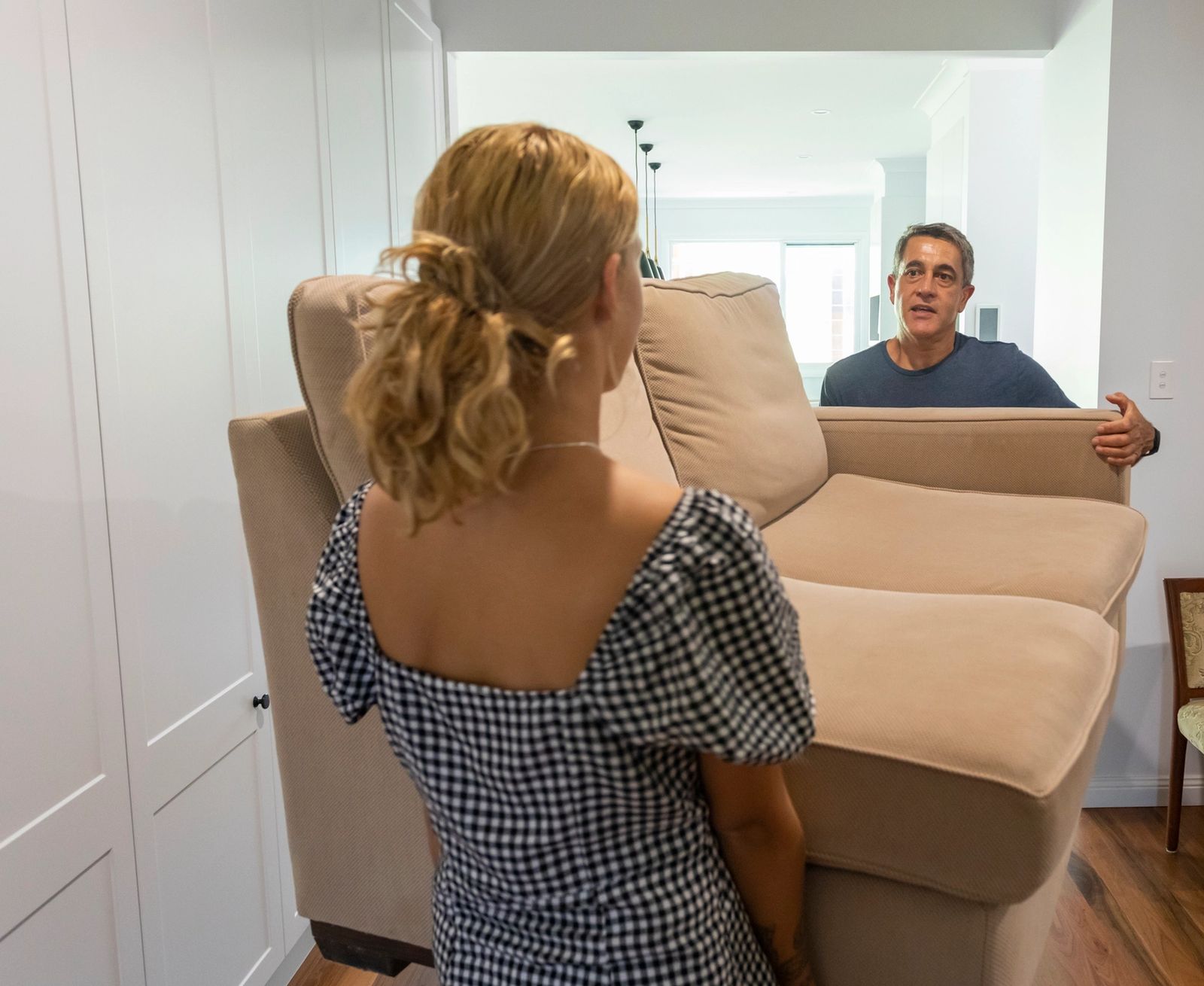
Picture this: You've found the perfect sectional sofa at a local outlet—a floor model marked down 40%. The price is right, the condition is excellent, and it's exactly what you've been searching for. You arrange pickup, recruit friends with a truck, and arrive home ready to transform your living room. Then reality hits: the sofa won't fit through your front door.
This scenario plays out more often than you might think, and it's especially costly when shopping floor samples, open-box items, and clearance furniture where return policies are typically limited or nonexistent. A great deal only stays great when the item actually makes it into your home.
This guide will walk you through the complete measurement process—from your doorway to your destination—so you can shop with confidence and avoid the frustration, expense, and disappointment of a failed furniture delivery.
If you're new to shopping floor models and outlet furniture, we recommend starting with our foundational guides: What Is a Floor Sample? and Floor Sample vs Open-Box vs Overstock to understand what you're buying and why these items offer such compelling value.
Why Measuring Matters More Than You Think
When you purchase new furniture from a major retailer with white-glove delivery, the delivery team handles the logistics. They measure, they maneuver, and if something doesn't fit, they typically offer solutions or returns. But when you're buying floor models, open-box appliances, or clearance items from local retailers—especially through platforms like FLRPL—the responsibility shifts to you.
The stakes are higher because:
- Returns are typically final sale or heavily restricted. Floor models and outlet items are often sold as-is, meaning once you take possession, you own it regardless of whether it fits.
- You're likely handling your own pickup and delivery. Without professional movers, you need to understand the route your sofa, refrigerator, or dining table will take through your home.
- Damage becomes your liability. Forcing a too-large item through a too-small space can damage your walls, door frames, the item itself, or all three.
- Time and money are wasted. A failed delivery means renting a truck again, recruiting help again, and potentially losing your discount if you can't complete the sale.
Professional furniture movers estimate that improper measurements account for 15-20% of delivery failures, with the most common issues occurring at doorways, stairwells, and tight hallway corners. These problems are entirely preventable with proper planning.
Great deals on floor models and overstock furniture represent genuine savings—often 30-60% off retail—but only when they successfully make it from the showroom to your living room. Measuring isn't just a best practice; it's the difference between a smart purchase and an expensive mistake.
What You Need Before You Start
Before you even look at furniture dimensions, gather the right tools. Professional delivery teams and interior designers use specific equipment to ensure accuracy, and you should too.
Essential Tools
Tape measure (25-foot minimum): A standard 12-foot tape measure won't reach across most rooms or hallways. Invest in a 25-foot or 30-foot measuring tape with a locking mechanism. Look for one with both imperial and metric markings for maximum versatility.
Smartphone with camera: You'll use this to photograph tight spaces, document measurements, and reference images while shopping. Modern smartphones also offer measurement apps that can provide quick approximations, though a physical tape measure is more reliable.
Note-taking method: Whether it's a dedicated notebook, a notes app, or a simple text document, you need a system to record measurements. Include labels for each measurement (e.g., "front door width at narrowest point including trim") so you don't confuse numbers later.
Helper: Measuring large spaces, especially vertical clearances and long hallways, is difficult alone. A second person ensures accuracy and makes the process faster.
Helpful But Optional
Floor plan or home layout sketch: If you have architectural drawings or can quickly sketch your home's layout, it helps visualize the delivery path and identify potential problem areas.
Laser distance measure: These digital tools provide instant, accurate measurements and are especially useful for ceiling heights and long corridors. Entry-level models cost $30-50 and can be valuable if you shop for furniture regularly.
Furniture moving straps or sliders: If you're doing your own delivery, having these on hand during your measurement phase lets you test weight distribution and handling logistics.
Step 1: Measure Your Final Destination Space
Start at the end. Before you worry about doorways and hallways, confirm that the furniture will actually fit in the room where it's going to live. This seems obvious, but many buyers skip this step, assuming that if it fits through the door, the rest will work out.
Room Dimensions
Measure the width, depth, and height of the space where the furniture will be placed. For a sofa against a wall, measure the wall length. For a dining table in the center of a room, measure the total floor space and subtract clearance for chairs and walking paths.
Critical consideration: Don't measure to the exact edge of the space. Leave breathing room. For sofas and large seating, allow at least 30-36 inches of clearance in front for a coffee table and foot traffic. For dining tables, add 36-42 inches on all sides where chairs will be placed—this ensures diners can pull out chairs and servers can walk behind seated guests.
Appliance-Specific Measurements
Refrigerators, washers, and dryers require additional considerations:
- Ventilation clearance: Most appliances need 1-2 inches of space on the sides and back for proper airflow. Check manufacturer specifications, which are usually available online even for floor models.
- Door swing radius: Refrigerator doors need space to open fully (typically 90-110 degrees). Measure the arc the door will travel and ensure no walls, islands, or cabinets interfere.
- Utility connections: Note the location of electrical outlets, water lines, gas connections, and dryer vents. Your new appliance needs to reach these without extension cords or adapters, which often violate warranty terms and building codes.
Height Considerations
Ceiling height matters more than most buyers realize. Standard residential ceilings are 8 feet, but older homes may have 7-foot ceilings, and modern construction often features 9-foot or higher ceilings. Measure floor-to-ceiling height at multiple points, especially if you're installing tall wardrobes, shelving units, or stacked washer-dryer combos.
Watch for obstacles: Ceiling fans, light fixtures, exposed beams, ductwork, and crown molding all reduce effective ceiling height. A room with an 8-foot ceiling might only have 7 feet 4 inches of usable clearance if there's a ceiling fan.
Step 2: Measure Every Entry Point
Entry points are where most furniture delivery failures occur. A door that appears wide enough at first glance may have trim, weather stripping, or hardware that reduces the actual clearance by several inches.
Exterior Doors
Measure the width and height of your front door, side door, patio door, or any other entry you might use. Don't just measure the door panel itself—measure the clear opening space.
How to measure door openings correctly:
- Open the door fully and measure the distance from the inside edge of the door frame on one side to the inside edge on the other side at the narrowest point.
- Measure height from the floor (or threshold) to the top of the door frame at the lowest point.
- If there's a storm door or screen door, measure with it open and note whether it can be temporarily removed if needed.
Standard front doors are 36 inches wide, but actual clearance after accounting for trim and door thickness is often 32-34 inches. Older homes may have 30-32 inch doors with even less clearance.
Double doors don't automatically solve size problems. While French doors or double entry doors provide more width, they often have a center post or astragal (the vertical piece where the doors meet) that reduces total clear width. Measure the actual usable opening with both doors open.
Garage and Basement Entries
If your delivery plan involves bringing furniture through a garage or basement entrance, measure these openings using the same method. Garage entries from the house are often smaller than front doors (30-32 inches is common), while exterior garage doors obviously offer much more clearance but may require navigating stairs or ramps.
Interior Doorways
Don't forget about interior doors between your entry point and destination room. A sofa that fits through your front door might not fit through your bedroom or office door. Standard interior doors are 30-32 inches wide, providing roughly 28-30 inches of clearance.
Pro tip: Remove doors from hinges if needed. This is a simple process that adds 1-2 inches of clearance and eliminates the door itself as an obstacle. Keep the hinge pins in a labeled bag for easy reinstallation.
Step 3: Measure Hallways, Stairs, and Elevators
After entry points, navigational pathways are the second-most common failure point for furniture delivery. These spaces are especially challenging because they involve not just width and height, but also turning radius and maneuvering space.
Hallways
Measure hallway width at the narrowest point, which is usually where baseboards, chair rails, or wall outlets protrude. A hallway that appears to be 40 inches wide may actually provide only 36 inches of clear space once you account for these elements.
Hallway corners are critical. If your delivery path includes a 90-degree turn from one hallway into another, you need to calculate whether your furniture can navigate that corner. This involves understanding pivot clearance—the diagonal space required when a long item (like a sofa or table) is angled through a turn.
Quick pivot clearance calculation: For a rectangular item, the diagonal measurement (using the Pythagorean theorem: √(width² + depth²)) must be less than the combined width of both hallway segments. For example, a sofa that's 90 inches long and 36 inches deep has a diagonal of roughly 96 inches. To pivot this through a corner, you need hallways that together provide at least 96 inches of clearance, plus a few inches of buffer.
Staircases
Stairs are the most challenging delivery obstacle. You need to measure multiple dimensions:
- Stairway width: Measure from wall to wall (or wall to railing) at the narrowest point, typically where the handrail is mounted.
- Ceiling clearance: Measure the vertical space from each step to the ceiling or any overhanging structure. This decreases as you ascend.
- Landing dimensions: Measure any landings or platforms where the stairs turn. Large items must be able to rest and pivot on these spaces.
- Railing height and protrusion: Note whether railings can be temporarily removed. Some railings are decorative and can be unscrewed; others are structural and cannot be modified.
Vertical clearance on stairs is particularly tricky. As you carry a long sofa or mattress up stairs, the angle means you need more vertical space than you might expect. A useful rule of thumb: add the height of your furniture to the depth and ensure this combined measurement is less than your stairway's vertical clearance.
Elevators
If you live in an apartment or condo, measure elevator interior dimensions (width, depth, and height) and door clearance. Also note weight limits, which are posted inside most elevators. A leather sectional with a hardwood frame can easily weigh 300-400 pounds, and adding movers puts you closer to weight limits than you might think.
Service elevators in apartment buildings are typically larger than passenger elevators. If your building has one and you can arrange access, this is often the better route for large furniture.
Step 4: Map and Walk the Complete Delivery Path
Now that you have individual measurements, walk the entire route your furniture will travel from your vehicle to its final destination. Think like a delivery professional: Where will you set the item down to rest? Where will you need to tilt, rotate, or angle it? What obstacles could cause problems?
Document Problem Areas
Take photos of:
- Tight corners where walls meet at odd angles
- Doorways with low headers or decorative molding
- Staircases with low ceilings or turns
- Railings, light fixtures, or wall-mounted art that might need temporary removal
- Any area where you think "this might be close"
Having visual documentation is invaluable when discussing delivery options with retailers or when shopping for furniture. You can show sales staff your hallway configuration and ask, "Will this sectional navigate this corner?"
Test the Route with Similar-Sized Items
If possible, practice maneuvering a large cardboard box or existing furniture piece along your planned route. This gives you a tactile sense of how much clearance you really have and where you'll need extra hands or strategy.
Step 5: Get Exact Product Dimensions
You've measured your home; now you need accurate measurements of the furniture or appliance you want to buy. This is where floor model shopping requires extra diligence.
Overall Dimensions vs. Packaged Dimensions
Overall dimensions are the size of the furniture in its final, assembled state. This is what matters for room fit.
Packaged dimensions are the size of the box or wrapping if the item is still boxed. For open-box or floor models, packaged dimensions are usually irrelevant unless the item will be partially disassembled for transport.
Shipping dimensions are sometimes listed separately and may include extra padding or crating. For local pickup, these don't usually apply.
Measure the Floor Model Yourself
Product specifications are helpful, but they can be inaccurate or outdated. When buying a floor model, measure it yourself whenever possible. Bring your tape measure to the store and verify:
- Width at the widest point (including armrests, protruding hardware, or decorative elements)
- Depth from front to back (including reclined positions for chairs and sofas if applicable)
- Height at the tallest point (including removable cushions or backrests)
For sectionals, measure each piece individually if they separate. Knowing that a sectional can be transported as two 60-inch pieces rather than one 120-inch unit changes everything.
Weight Matters Too
Ask the retailer for the item's weight. Manufacturers typically provide this in product specifications. For context:
- A standard three-seat sofa weighs 150-250 pounds
- A leather sectional can weigh 300-500 pounds
- A side-by-side refrigerator weighs 250-350 pounds
- A solid wood dining table weighs 100-200 pounds
If an item weighs more than 200 pounds, realistically assess whether you and your helpers can safely move it. Back injuries from furniture moving are common, and professional delivery services (often $100-300) are cheaper than emergency room visits.
Step 6: Understand Turning Clearance and Pivot Points
Turning clearance refers to the extra space needed when a large item must be rotated, tilted, or angled to fit through an opening. This is one of the most misunderstood aspects of furniture delivery.
The Two-Inch Rule
Professional movers use a general guideline: if your clearance is within two inches of your furniture dimensions, expect problems. Furniture is rarely perfectly rectangular—armrests protrude, backs curve, corners aren't perfectly square. You need buffer space to account for these irregularities and for human error in maneuvering.
Example: If your doorway provides 34 inches of clear width and your sofa is 36 inches deep, you don't have a two-inch problem—you have an impossible situation unless you can rotate or tilt the sofa. However, if your sofa is 32 inches deep, the two-inch buffer makes this manageable with careful handling.
Diagonal Maneuvering
Most large furniture must be turned diagonally at some point during delivery. This is especially true for long sofas navigating doorways or beds going around corners. When an item is tilted diagonally, its effective width or height temporarily increases.
The mathematical reality: A sofa that's 84 inches long and 40 inches tall, when tilted to a 45-degree angle, requires roughly 93 inches of diagonal clearance. This means you need 93 inches of combined doorway width and ceiling height to fit this sofa through while tilted.
You don't need to calculate exact angles, but understand the principle: diagonal positioning requires more space than straight-on movement.
Where Turning Clearance Matters Most
- Doorway entry: Tilting a sofa through a front door
- Hallway to room transition: Pivoting a dining table from a hallway into a dining room
- Stairway landings: Rotating a mattress on a landing to continue up the next flight
- Elevator entry: Angling a refrigerator into an elevator car
Step 7: Check for Removable Legs and Disassembly Options
Here's a secret that can save countless deliveries: many pieces of furniture are designed to be partially disassembled, but retailers and buyers often don't realize it. Removable legs alone can reduce a sofa's height by 4-8 inches, which is often the difference between fitting through a doorway and getting stuck.
Sofas and Sectionals
Most modern sofas—and nearly all sectionals—have removable legs. Turn the sofa over or look underneath the base. You're looking for:
- Threaded legs: These screw directly into metal or wooden inserts in the sofa frame. Turn counterclockwise to remove.
- Bolt-attached legs: These use bolts or screws to attach legs to mounting plates. Bring a screwdriver or Allen wrench.
- Snap-in legs: Less common, but some contemporary designs use legs that snap into brackets and can be pulled out.
Removing legs is safe and reversible, and it doesn't affect the furniture's structural integrity. Many manufacturers ship sofas with legs detached for exactly this reason.
Dining Tables and Desks
Tables often have removable legs or bases. Look under the tabletop for:
- Bolt-on legs with visible screws or bolts
- Pedestal bases that detach from the top
- Folding or collapsing mechanisms
Disassembling a dining table for transport is standard practice and usually takes 10-15 minutes with basic tools. The tabletop can be carried separately (easier through doorways), and the base follows.
Bed Frames and Headboards
Platform beds, bed frames, and headboards almost always disassemble. Look for:
- Side rails that detach from the headboard and footboard
- Slat systems that lift out
- Mounting brackets that release with screws
A king-size bed frame that seems impossible to navigate through a 32-inch doorway becomes straightforward when broken into individual components: headboard, two side rails, footboard, and slats.
When to Ask for Help
If you're unsure whether components can be removed, ask the retailer or manufacturer. Floor model sales staff may not know off-hand, but they can check product manuals or contact the manufacturer. Never force or pry components that don't obviously detach—you could damage the furniture or void any remaining warranty protection.
Reassembly Best Practices
If you disassemble furniture for delivery:
- Photograph each step as you disassemble. Take close-ups of how components connect, which holes align, and the orientation of parts.
- Bag and label all hardware. Put screws, bolts, washers, and any small parts in labeled plastic bags. Tape these bags to a corresponding furniture piece.
- Keep instruction manuals. If the floor model came with assembly instructions, keep them. If not, many manufacturers provide PDFs online.
- Work on a protected surface. Use blankets or cardboard to protect furniture finishes and your floors during reassembly.
When NOT to Disassemble
Do not attempt to disassemble furniture if:
- Components are glued or permanently joined. Glued joints aren't meant to come apart. Forcing them causes irreparable damage.
- You see no obvious connection points. If there are no visible screws, bolts, or mounting hardware, the piece likely isn't designed for disassembly.
- The retailer warns against it. Some floor models have been reinforced or modified in ways that make disassembly risky.
- Warranty restrictions apply. Although rare for floor models (which typically have limited or no warranty), check whether disassembly voids any coverage.
When in doubt, ask. A quick conversation with the retailer can prevent costly mistakes.
Step 8: Don't Overlook Vertical Clearance
While most buyers focus on horizontal measurements—will it fit through the door width—vertical clearance causes nearly as many problems, especially with tall furniture and appliances.
Common Vertical Obstacles
Ceiling fans: The blades or motor housing may hang 12-18 inches below the ceiling, creating a lower effective ceiling height in the center of a room.
Light fixtures and chandeliers: Pendant lights and chandeliers can hang 24-36 inches below the ceiling, especially in dining rooms and entryways.
Exposed beams: Decorative or structural beams reduce ceiling height in specific areas. Measure floor-to-beam distance where your furniture will pass.
Door headers and trim: Decorative molding above doorways can reduce clearance by 2-4 inches. Measure at the lowest point.
Low basement ceilings: Unfinished basements often have exposed ductwork, pipes, and joists that reduce ceiling height to 6.5-7 feet in places.
Tall Furniture Types to Watch
- Wardrobes and armoires: Often 72-84 inches tall
- Shelving units and bookcases: Can exceed 80 inches
- Refrigerators: Standard counter-depth models are 70-72 inches; full-size models are 68-70 inches
- China cabinets and hutches: Frequently 72-78 inches tall
- Four-poster beds: Canopy beds can reach 80-90 inches
The Tilt Test
Even if a wardrobe is 80 inches tall and your ceiling is 96 inches (8 feet), you may still have problems if doorways are only 80 inches tall. You'll need to tilt the wardrobe to get it through the door, which temporarily increases its spatial footprint.
Visualization: Imagine tilting an 80-inch-tall wardrobe that's also 36 inches deep. When tilted at 45 degrees, it needs roughly 88 inches of diagonal clearance. Your doorway needs to accommodate this angle, which means having both width and height available simultaneously.
Step 9: Consider Weight, Handling, and Floor Load
Beyond dimensions, think about the practical realities of moving heavy items.
Floor Strength and Load Distribution
Most residential floors are designed to support 40 pounds per square foot. Furniture typically spreads weight across multiple contact points (legs, bases), which distributes load safely. However, extremely heavy items in small footprints—like a 400-pound solid marble coffee table—can exceed floor tolerances, especially in older homes or on upper floors.
When to check: If you're buying an exceptionally heavy item (solid wood armoire, commercial-grade appliance, stone furniture), and you live in an older home or apartment, consider consulting a structural engineer or your building management about floor load limits.
Stairway Safety
Carrying heavy furniture up or down stairs is dangerous. Beyond measuring whether it fits, assess whether you can safely control the weight on an incline. Factors to consider:
- Number of helpers: Two people minimum; three or four for items over 200 pounds
- Grip points: Can you get a solid hold on the furniture, or are surfaces smooth and hard to grasp?
- Resting opportunities: Can you set the item down on landings to rest, or is it continuous?
If you have any doubt about safely navigating stairs with a heavy item, professional delivery is worth the cost. Most local delivery services charge $100-300, which is far less than an injury or damaged furniture.
Professional Delivery Considerations
Many FLRPL retailers offer professional delivery services, even for floor models and clearance items. When deciding whether to DIY or hire help, consider:
- Liability: Professional movers are insured. If they damage your wall or furniture, their insurance covers it.
- Efficiency: Professionals have tools, techniques, and experience that make difficult deliveries routine.
- Injury risk: A back injury can mean thousands in medical bills and lost work time.
Cost context: Local furniture delivery typically ranges from $75 for small items within the same city to $300+ for large items requiring multiple movers. Compare this to truck rental ($50-100), friend recruitment (pizza and beer, realistically $30-50), and your own time and risk.
Step 10: The Final Pre-Purchase Checklist
Before you commit to purchasing that floor model sectional or clearance refrigerator, run through this final checklist. Print it out or save it to your phone—this is your last line of defense against a costly mistake.
Destination Space
- Room width accommodates furniture with 30+ inches of clearance
- Room depth allows for traffic flow and intended use
- Ceiling height clears furniture with at least 6 inches buffer
- Ventilation space confirmed for appliances (1-2 inches per manufacturer specs)
- Appliance door swing clears nearby walls, islands, cabinets
- Utility connections (electrical, water, gas, vents) accessible
Entry Points
- Front door clear width measured at narrowest point
- Front door clear height measured at lowest point
- Alternative entries measured (garage, patio, basement)
- Interior doorways between entry and destination measured
- Door removal plan in place if needed (and hardware available)
Pathways
- Hallway width measured at narrowest point (accounting for baseboards)
- Hallway corners assessed for pivot clearance
- Stairway width, height, and landing dimensions measured
- Elevator dimensions and weight limits confirmed (if applicable)
- Vertical obstacles documented (ceiling fans, light fixtures, beams)
Furniture/Appliance Specifications
- Overall dimensions verified (width, depth, height)
- Actual floor model measured (not just relying on listed specs)
- Weight confirmed and assessed for safe handling
- Removable legs or components identified
- Disassembly options discussed with retailer
- Reassembly instructions or manual available
Clearances and Logistics
- Turning clearance calculated for tight corners and doorways
- Diagonal measurements considered for tilted maneuvering
- Two-inch buffer rule applied to all tight fits
- Complete delivery route walked and photographed
- Professional delivery option priced and considered
Why This Matters for FLRPL Shoppers
FLRPL exists to connect savvy shoppers with verified local retailers offering genuine deals on floor models, showroom samples, and overstock furniture. These items represent exceptional value—often 30-60% off retail pricing—but they come with the reality that returns are typically limited or impossible.
That's why measuring matters more when shopping FLRPL.
When you buy through FLRPL, you're often purchasing from local, independent retailers who operate on thin margins. These merchants price floor models aggressively because they need to clear showroom space for new inventory. They're offering you a genuine discount, but in exchange, sales are often final or subject to restocking fees.
Before you browse FLRPL's latest drops, review these companion guides:
- How to Find the Best Drops on Floor Samples — Learn how to identify the highest-value floor models and when to act quickly on time-sensitive deals.
- How to Tell If a Local Deal Is Worth It — Understand how to evaluate condition, compare pricing, and assess whether a floor model or open-box item delivers real savings.
Measuring protects your investment. That $1,200 sectional marked down from $2,800 is only a great deal if it makes it into your living room. The $800 you saved evaporates if you can't complete the delivery and can't return the item.
FLRPL retailers appreciate prepared buyers. When you arrive with measurements, questions about removable components, and a clear delivery plan, you signal that you're a serious buyer who understands the product. This often leads to better service, more detailed information, and smoother transactions.
Final Thoughts: Measure First, Regret Never
The fifteen minutes you spend measuring your doors, hallways, and destination spaces can save you hours of frustration, hundreds of dollars in failed delivery costs, and the heartbreak of losing out on a fantastic furniture deal.
Smart buyers measure before they shop. They arrive at showrooms and outlets with a notebook full of dimensions, photos of their delivery pathway, and specific questions about removable legs and disassembly. They don't fall in love with furniture that won't fit, because they've already eliminated those options through preparation.
Smart merchants appreciate prepared buyers. FLRPL's verified retailers want your purchase to succeed. They'd rather spend five minutes discussing whether a sofa's legs can be removed than deal with a failed pickup and an unhappy customer. When you ask informed questions, retailers can provide better guidance and more accurate expectations.
Preparation transforms great deals into great experiences. The joy of finding a $3,000 dining set for $1,200 isn't diminished by measuring—it's enhanced by the confidence that your purchase will actually work in your space. You're not hoping it fits; you know it fits.
This is how you shop with certainty. This is how you turn floor models, open-box appliances, and clearance furniture into the foundation of a beautifully furnished home without the inflated retail prices.
Ready to start shopping? Browse verified local deals on FLRPL, and buy with the confidence that comes from doing your homework. Your perfect piece is out there—make sure it fits through your door.
For more guides on smart furniture shopping, visit the FLRPL blog. We're here to help you find exceptional value on quality furniture and appliances from trusted local retailers.
Related Articles
Your Store. Your Merchandise. Your Digital Outlet.
Give your store a digital outlet. See how FLRPL helps local retailers showcase products, share their branded storefront, and connect with nearby shoppers.


You Don't Need Everyone to See It
Local merchandise doesn't need everyone to see it. Explore why proximity, availability, timing, and relevance all matter in local retail discovery.

Not Every Drop Has to Be a Deal
A Drop doesn't require a markdown. See how retailers can use FLRPL to feature new arrivals, seasonal merchandise, distinctive products, deals and more.
Discover What's Waiting Nearby
Browse inventory from verified local retailers near you.

